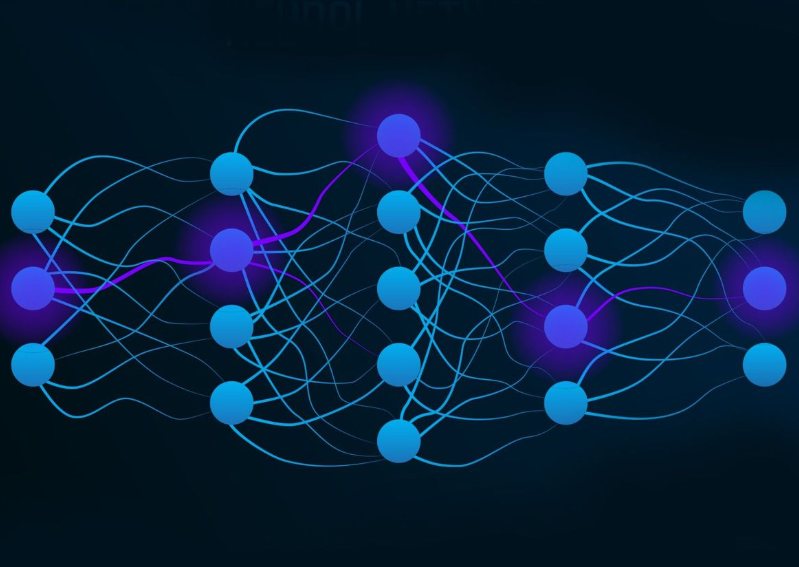
A neural network is a sophisticated computational model that mimics the human brain’s architecture. Comprised of layers of interconnected nodes, these networks process information through various mechanisms. Their ability to learn from data is pivotal in addressing complex problems. However, the intricacies of their structure and learning processes raise important questions. What truly distinguishes neural networks from traditional algorithms, and how do they adapt to diverse applications?
Understanding the Structure of Neural Networks
The architecture of neural networks comprises interconnected nodes, or neurons, organized into layers that facilitate complex data processing.
These neuron layers, including input, hidden, and output layers, employ activation functions to introduce non-linearities, enabling the network to model intricate patterns.
This structured design enhances the network’s capacity to analyze diverse datasets while maintaining functional flexibility, appealing to those who prioritize autonomy in computational solutions.
See also: Itzhak Ezratti Wife: A Quiet Force Behind a Real Estate Empire
How Neural Networks Learn
Numerous techniques enable neural networks to learn from data, with the most prominent being supervised learning, unsupervised learning, and reinforcement learning.
The backpropagation algorithm is essential for optimizing weights, utilizing activation functions to introduce non-linearity. Through iterative adjustments based on error gradients, neural networks refine their parameters, thereby enhancing their predictive accuracy and adaptability across diverse datasets, fostering a degree of autonomy in learning.
Real-World Applications of Neural Networks
While neural networks have gained prominence in academic circles, their real-world applications span a wide array of industries, showcasing their versatility and effectiveness.
Key implementations include image recognition in autonomous vehicles and facial recognition systems, as well as natural language processing in chatbots and virtual assistants.
These advancements highlight the capability of neural networks to enhance decision-making and automate complex tasks across various sectors.
Conclusion
In conclusion, neural networks represent a revolutionary leap in computational intelligence, mimicking the intricacies of the human brain to tackle complex problems. Their layered architecture and adaptive learning mechanisms empower them to excel across diverse domains, from image recognition to natural language processing. As they continue to evolve, the potential of neural networks to transform industries is nothing short of astronomical, promising to reshape the landscape of technology and human interaction in ways previously deemed unimaginable.